A good TV wall starts with how the room works. Stand at the doorway and sit where you usually watch, then notice what the screen, cabinet, and walkways leave room for. A wide wall can take a balanced pair of shelves, while a narrow room may benefit from one shallow shelf or a display to one side. Use the ideas below to choose a layout and plan where your equipment and everyday items will go. Before installing anything, check the television manufacturer's clearances and the mounting requirements of the wall, brackets and shelves.
1. Frame the Screen With Matching Oak Shelves
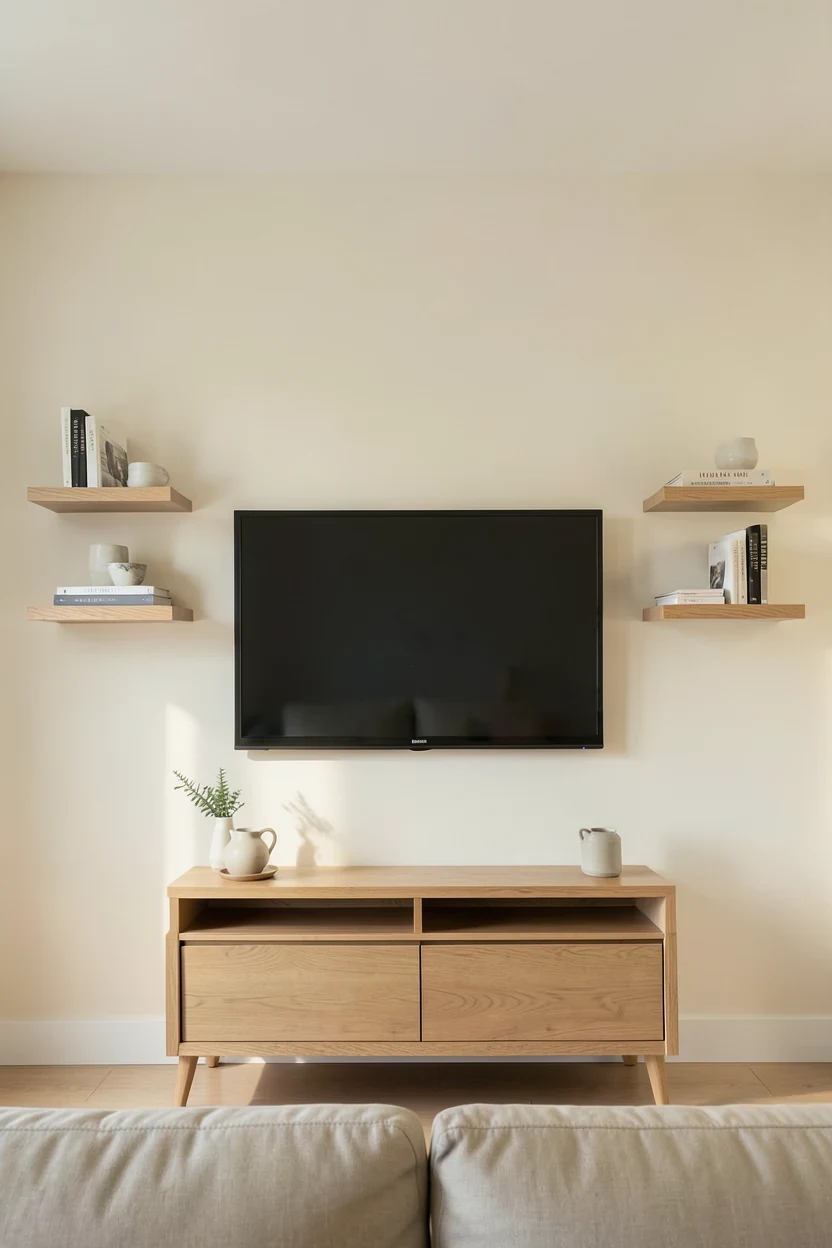
Start with the width of the TV and the space left on each side. On a wide wall, two short oak shelves on either side can make a centered screen feel like part of the room. Align the upper pair and lower pair across the screen, and leave a clear gap between each shelf end and the TV. Mock up the edges with painter's tape and check them from the sofa before drilling. Repeat the wood tone in a console or a small frame. A few objects per shelf are enough. Leave the spots closest to the screen empty if taller decor starts to compete with it.
2. Stack Shelves on One Side
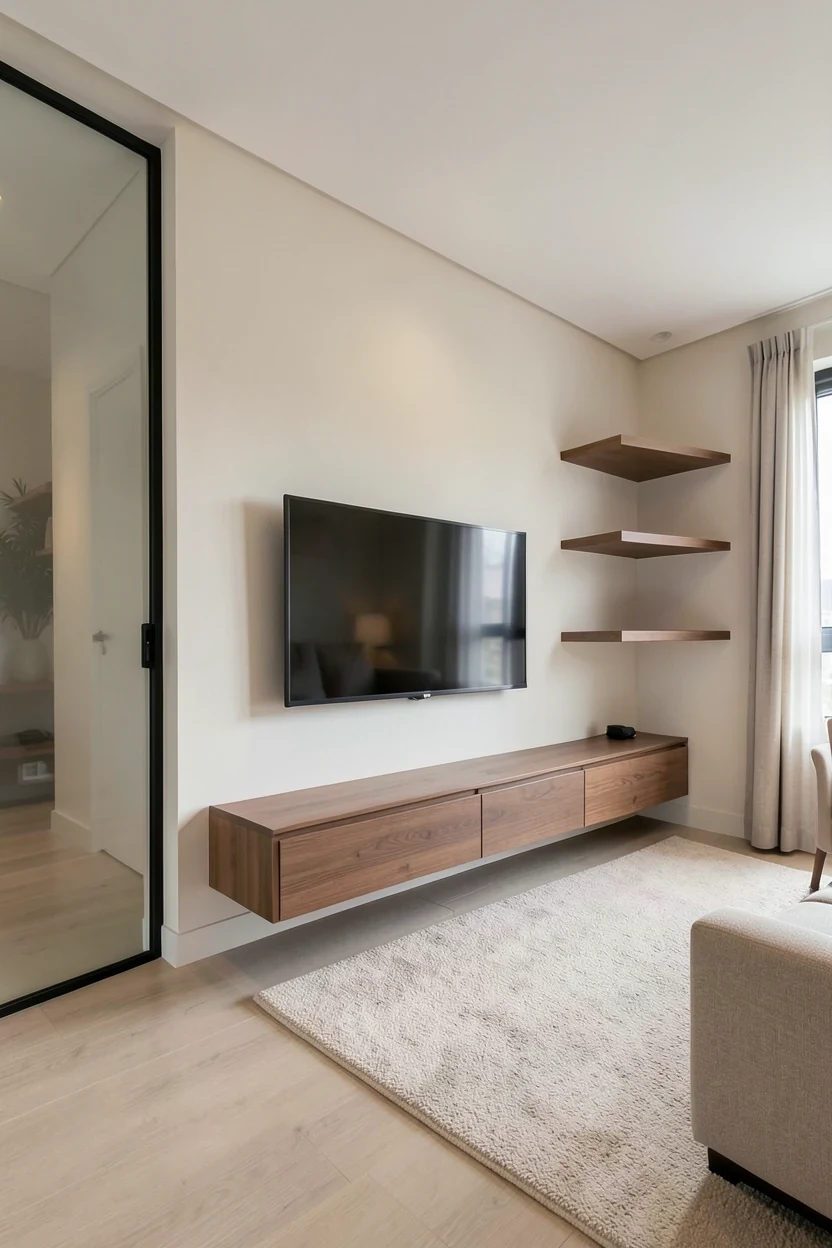
An off-center TV wall can look deliberate when all the shelving sits on the side with room for it. Put the TV where it works for the main seats, then use two or three shelves to fill the remaining wall. Leave the side by the window or doorway clear so the layout stays easy to read. You can balance the stack with a long console below or a floor lamp at the opposite end of the wall. If the shelves are crowded with books, start with two and leave a space for a third. Measure the door swing before deciding on shelf depth.
3. Use One Long Shelf Below the TV
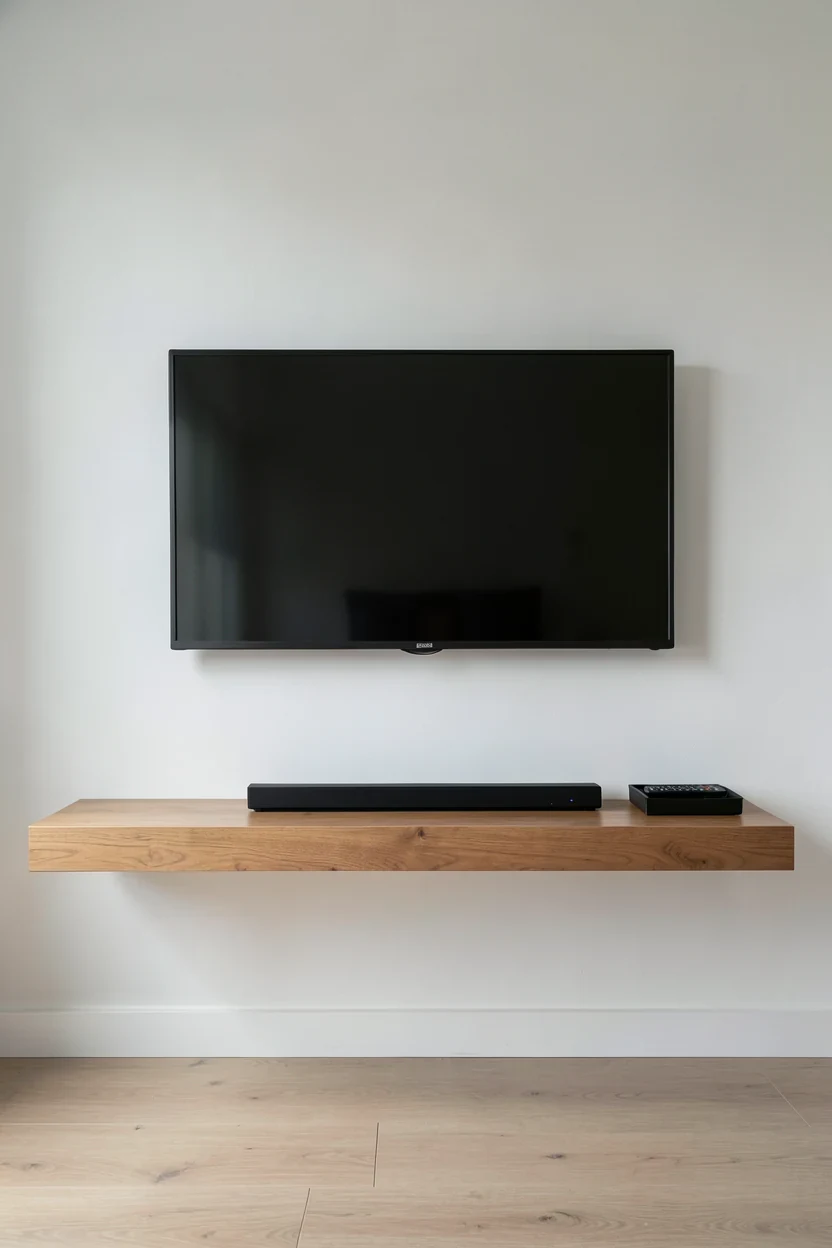
A long shelf below the TV keeps the floor clear and suits a room where a full media cabinet would feel too bulky. Use it for a remote tray or a soundbar if the shelf and its mounting system are rated for the load. A shelf that extends past both edges of the screen gives the wall a visible base. Keep enough vertical space to reach devices and plugs without moving the TV. If you need to store a console, several controllers, or a large collection of cables, closed storage may work better. Tape the shelf outline on the wall and look at it from the main seat.
4. Add a High Shelf for Display
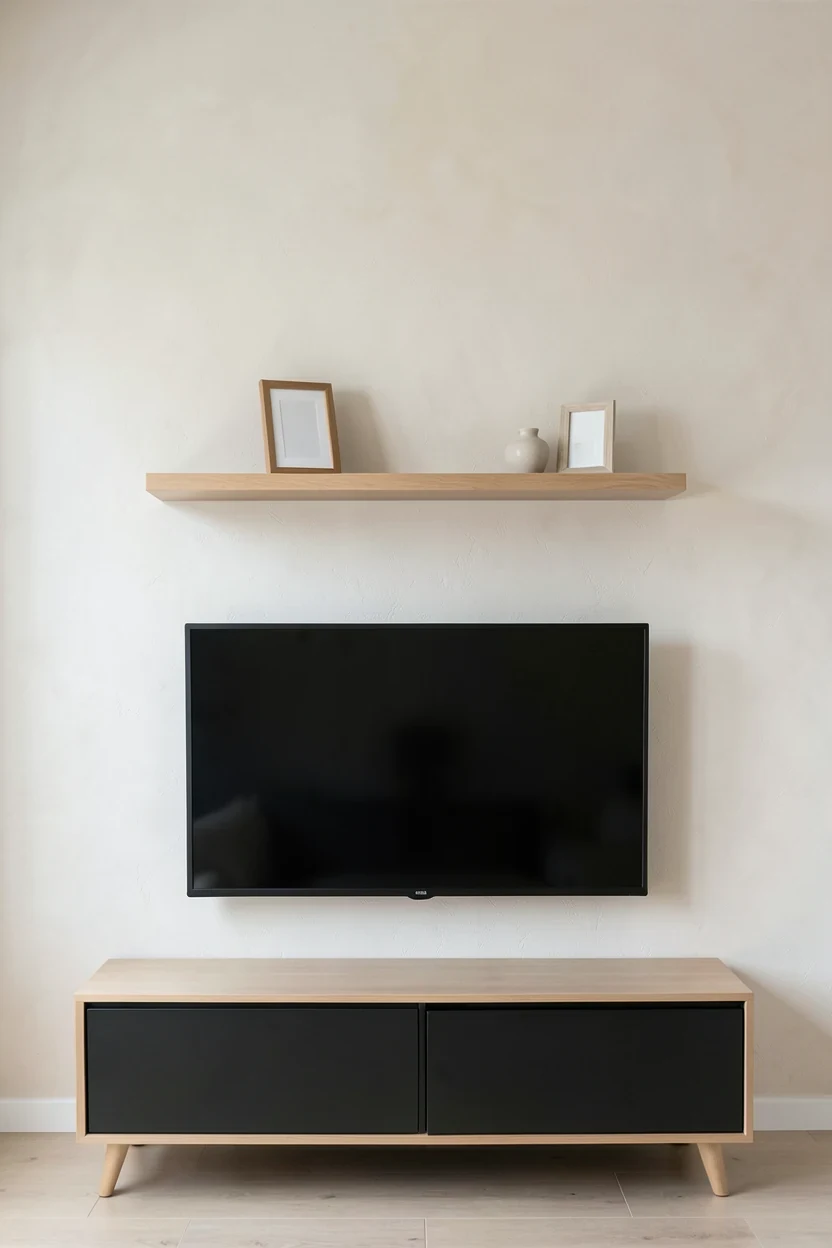
A high shelf can bring a tall wall into proportion when there is room above the TV and very little room at the sides. Use it for a few lightweight items that stay put, such as small framed prints with a secure support. Keep the display simple so it does not draw your eyes above the screen every time you watch. Check the television manual for clearance and leave the vents open. Use hardware suitable for the wall and the planned load. If the only available mounting position is too close to the TV or hard to reach safely, a side shelf or freestanding display may be a better fit.
5. Stagger Shelves on a Wide Wall
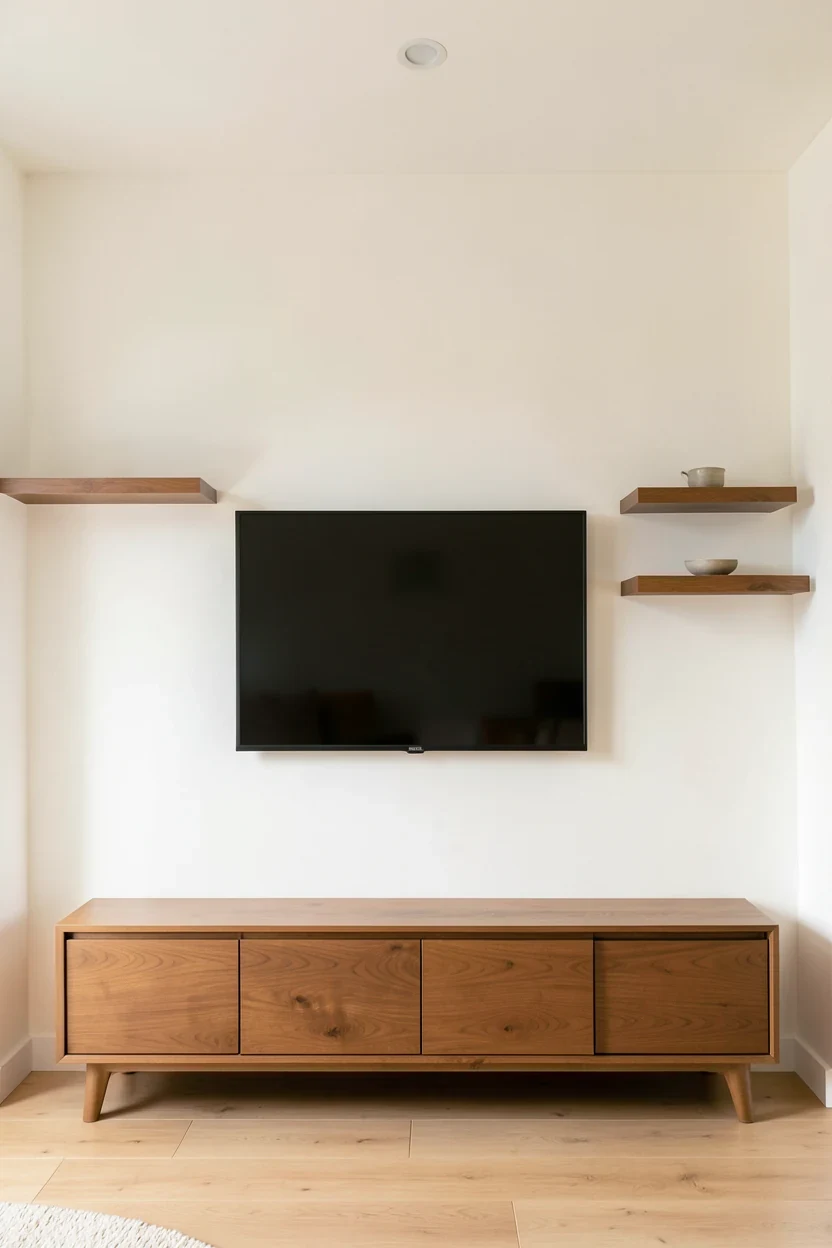
Staggered shelves suit a room where exact symmetry would feel too formal. Keep one reference line, such as the bottom of the screen or the top of the cabinet, so the arrangement still looks connected. Try one longer shelf on one side and two short shelves at different heights on the other. Make sure the shelf ends stay clear of the screen and objects do not block the view from an angled seat. Start styling with one group of books and a few objects. If each shelf is filled to the edge, it becomes harder to see the shape that made the staggered layout interesting.
6. Match Shelves to the Wall Color
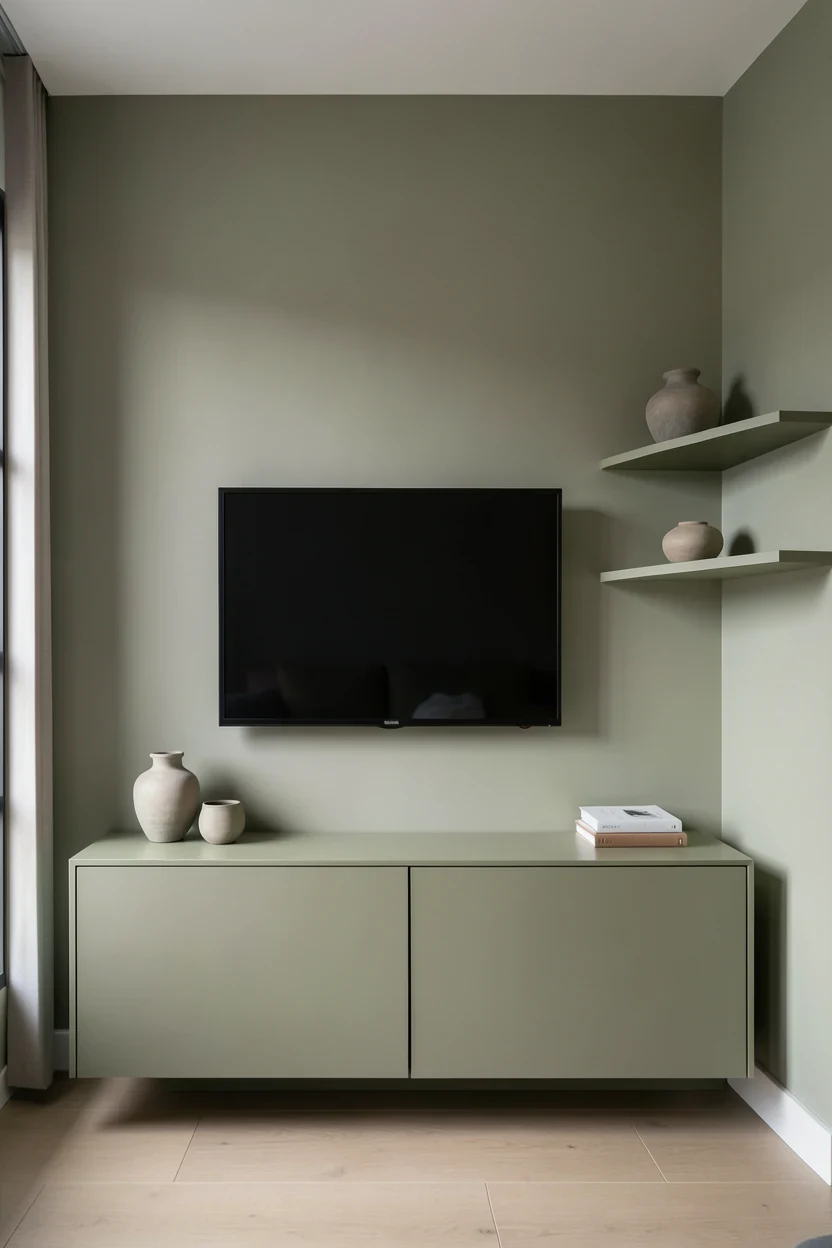
When the screen already creates a strong black rectangle, shelves painted to match the wall can keep the rest of the composition quiet. Use a finish suitable for shelf surfaces and check a sample next to the wall in daylight and with your evening lamps on. Differences in sheen can still make the shelves noticeable even when the paint color is close. Style them with a small number of dark or textured pieces so they have shape without looking cluttered. This is a good fit when you want some display space but do not want a second prominent wood tone in the room.
7. Contrast Pale Shelves With a Dark Wall
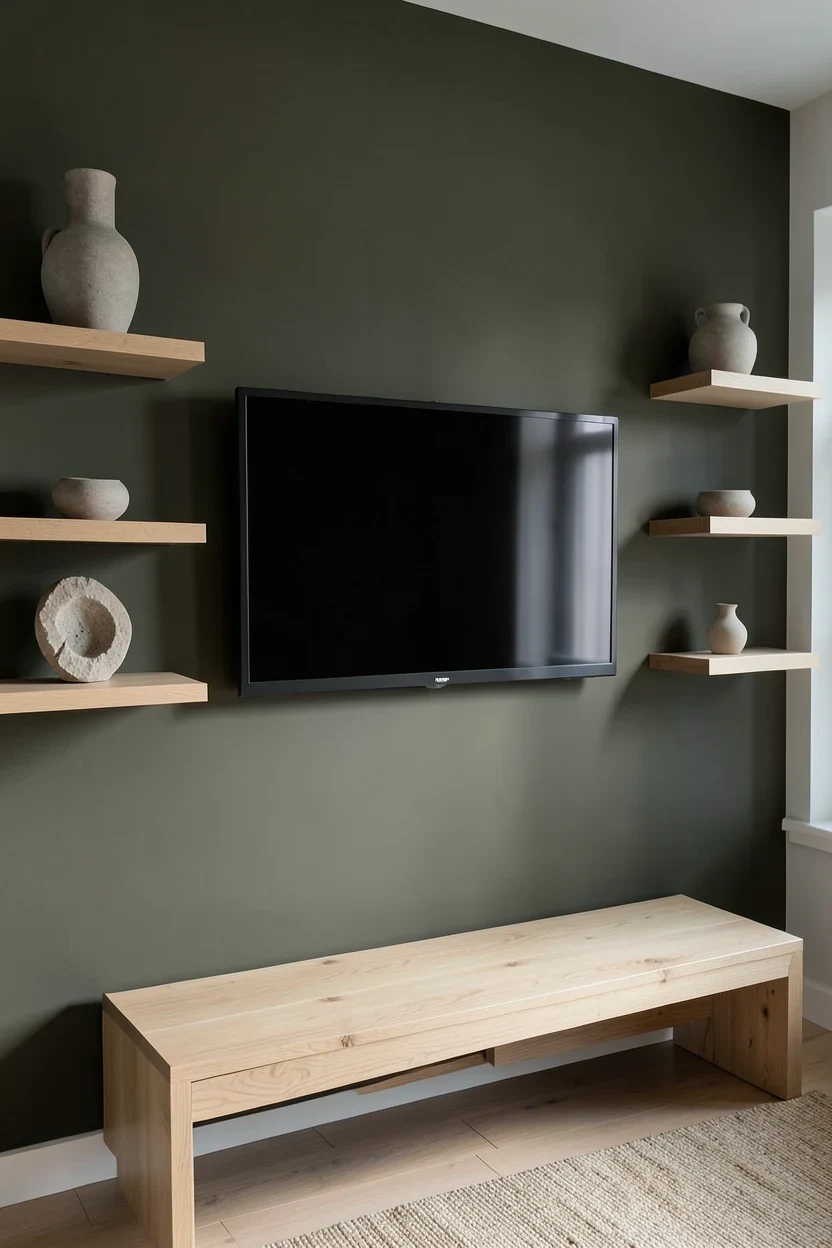
Try pale oak shelves against a charcoal or deep olive wall if you want the shelving to be more visible than the black screen. Keep the wood tone consistent across the shelves and repeat it once elsewhere, perhaps in a console or chair frame. Look at your paint sample from the sofa before committing. Some darker colors can make the room feel comfortable at night but dull in weak daylight. Use lighting from the side to show the shelf edges and texture. Keep bright objects away from the inner ends of the shelves if they keep catching your eye while you watch.
8. Fit Short Shelves Into an Alcove
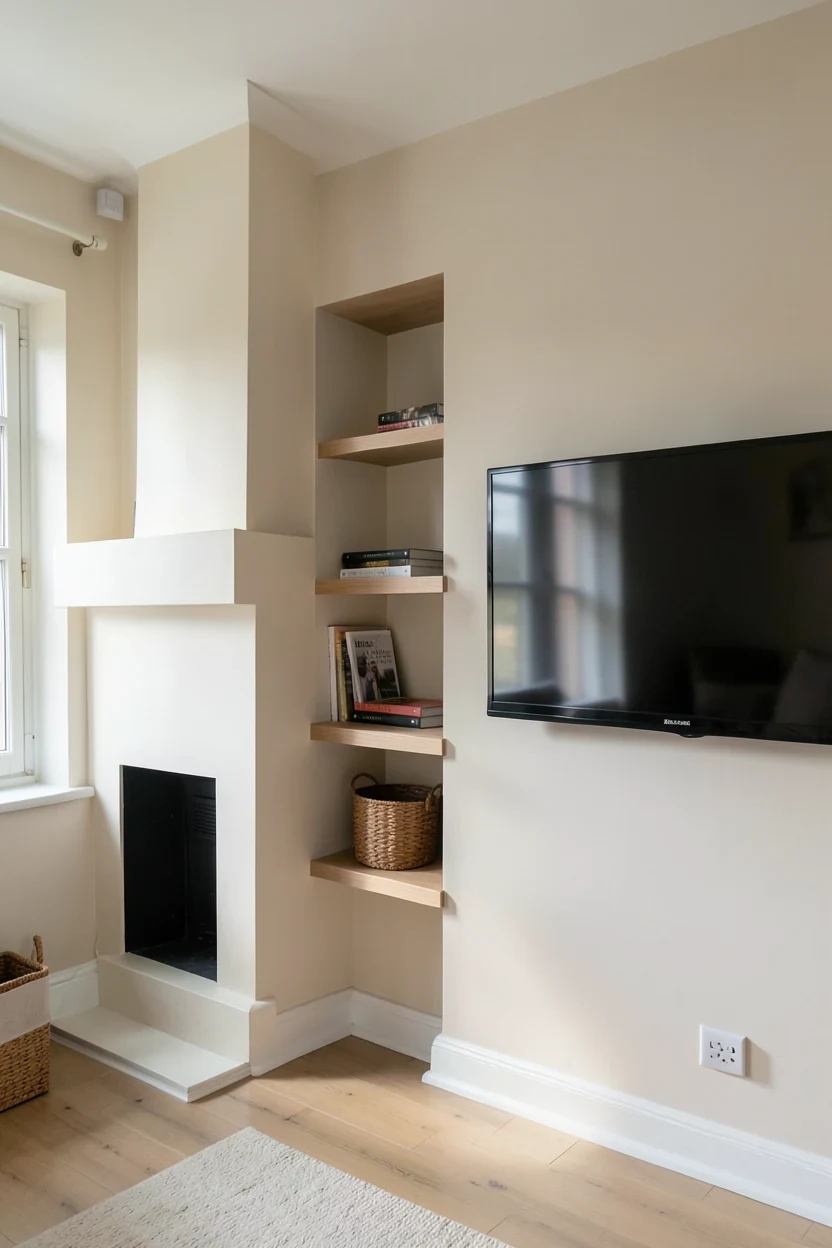
Use a recess beside the TV as its own display area. Measure the width at several heights before ordering shelves because older alcoves can taper. Short shelves fitted inside the recess can make use of space that would be awkward for a freestanding unit. Leave the outer TV wall open and use the recess for books, baskets or a small group of objects. If you plan to put electronics there, check the manufacturer's ventilation requirements and make sure you can reach the plugs. For a simple look, keep the shelf fronts inside the recess instead of extending them past the outer wall.
9. Pair Open Shelves With Closed Storage
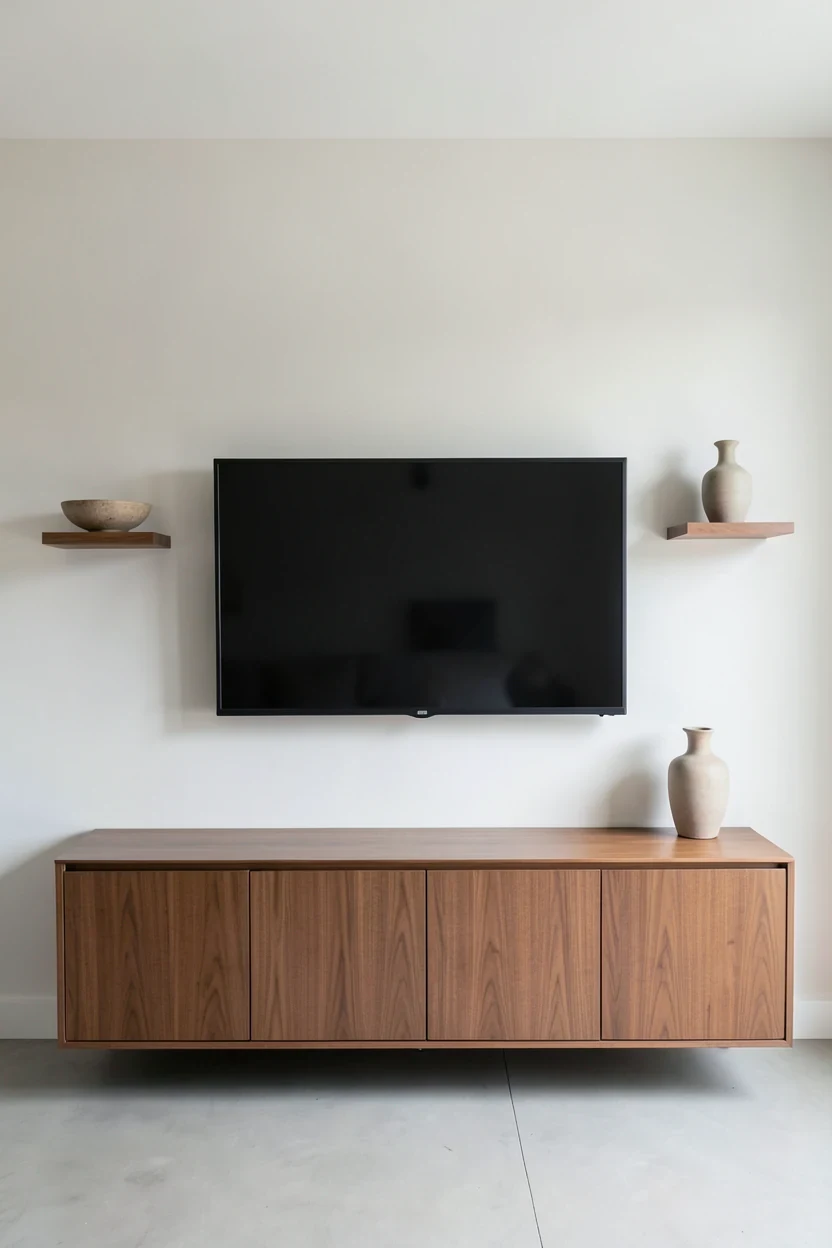
Give everyday clutter a place before deciding how many floating shelves to install. A low cabinet can hide remotes, cables and games, so the wall shelves can stay sparse. If you keep equipment inside the cabinet, choose a unit designed for its ventilation needs and make sure controls still work with the doors closed. Use shelves above the outer ends of the cabinet to connect the upper and lower halves visually. Try styling the room with the cabinet alone first. If the wall already feels balanced, one shelf on either side may be enough, and you can leave more blank space around the television.
10. Use Picture Ledges for Small Art
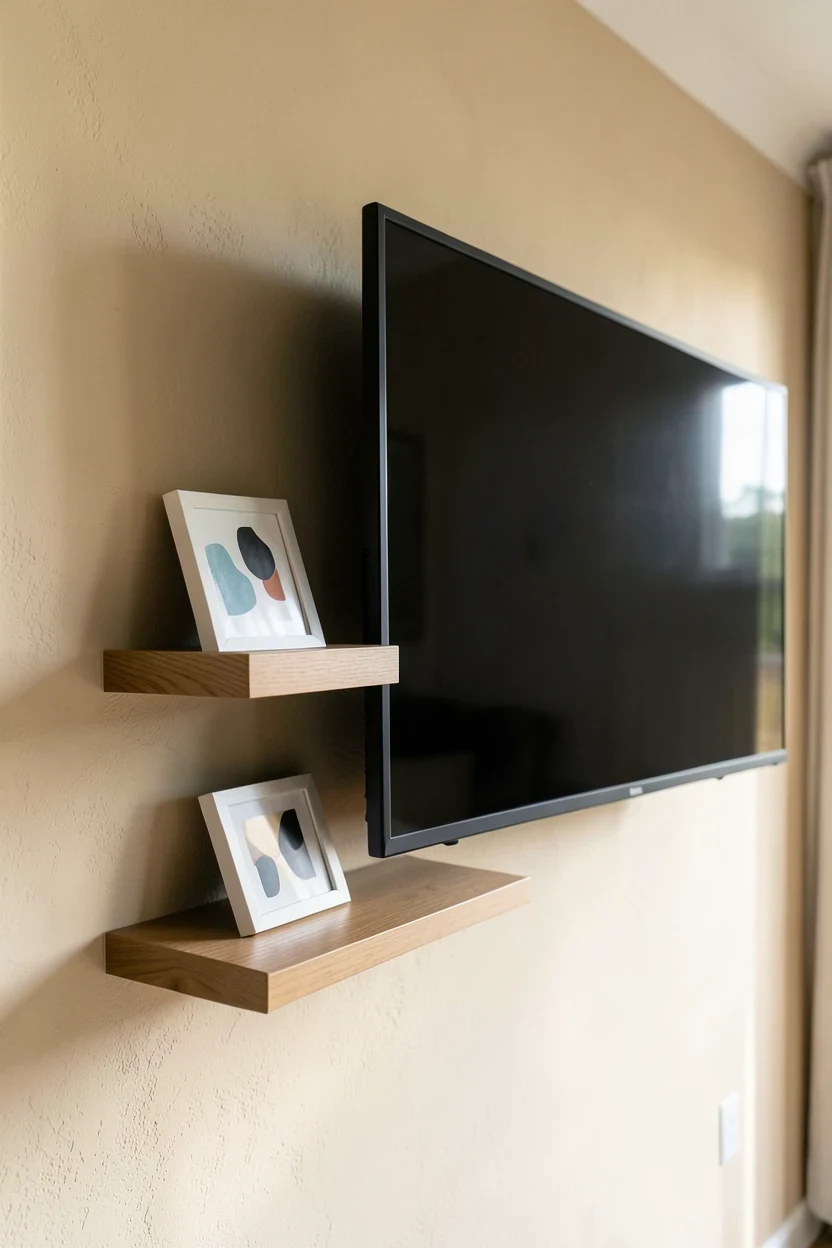
If you like changing the art around your TV, narrow picture ledges make it easy to swap small frames. Mount them beside the screen and leave enough wall space above each ledge for the tallest piece you want to use. A front lip helps keep the frames in place, and frame supports should suit the location. Use matte prints or low glare glazing if windows reflect brightly across the room. Keep the frames at a comfortable distance from the screen edges. A loose group of two or three small pieces usually looks calmer than a long row of frames competing with the picture on the TV.
11. Keep Shelves Shallow Near a Walkway
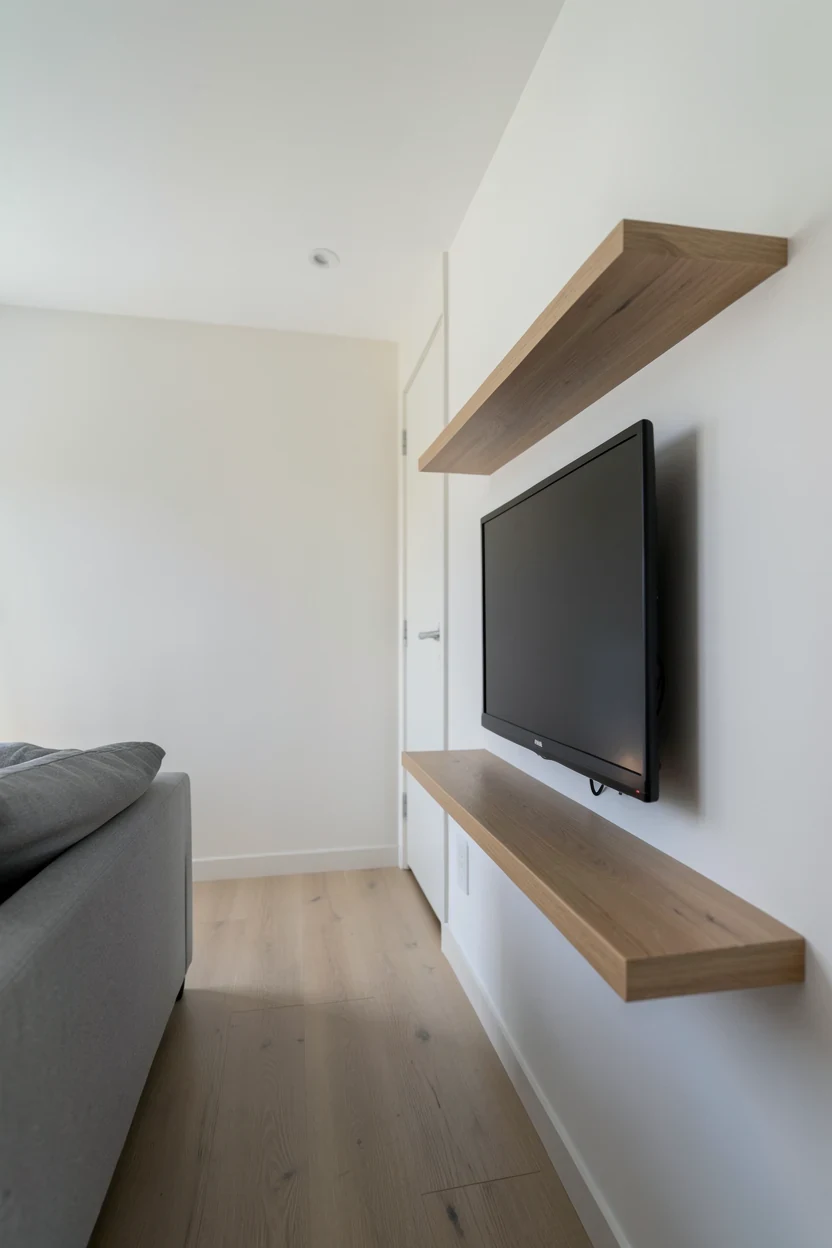
On a wall that borders a walkway, shelf depth matters more than the number of shelves. Choose shelves deep enough for the items you want to keep and keep their edges out of the route people use. Put the deeper storage elsewhere if you have large electronics or heavy books. A mock-up made with painter's tape and a piece of cardboard can help you see how far a shelf projects before you choose it. Walk past carrying a laundry basket or a tray to see whether the position is comfortable. Keep breakable items away from the exposed end of the shelf.
12. Plan a Separate Shelf for the Soundbar
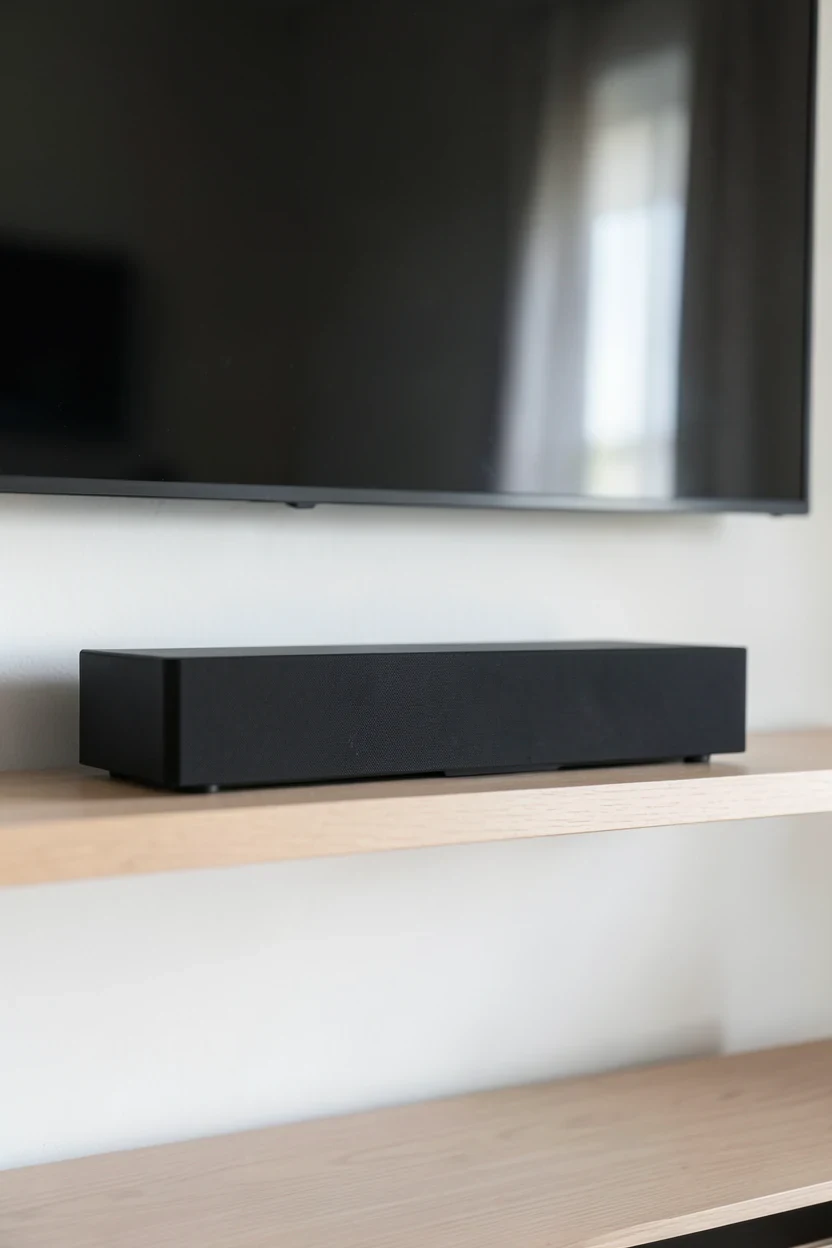
Give the soundbar its own shelf when the TV is wall mounted and there is no suitable place on the console. Check the soundbar manual before selecting a shelf, especially if the unit directs sound upward or needs clearance behind it. The controls, sensors and speaker openings should remain accessible. Mock up the shelf height to make sure it does not crowd the lower edge of the screen or block anything you need to reach. Keep decorative objects off that shelf so the unit has room on both sides. Plan the cable route before fixing the brackets, and use a suitable installer for permanent electrical work.
13. Light the Display Without Screen Glare
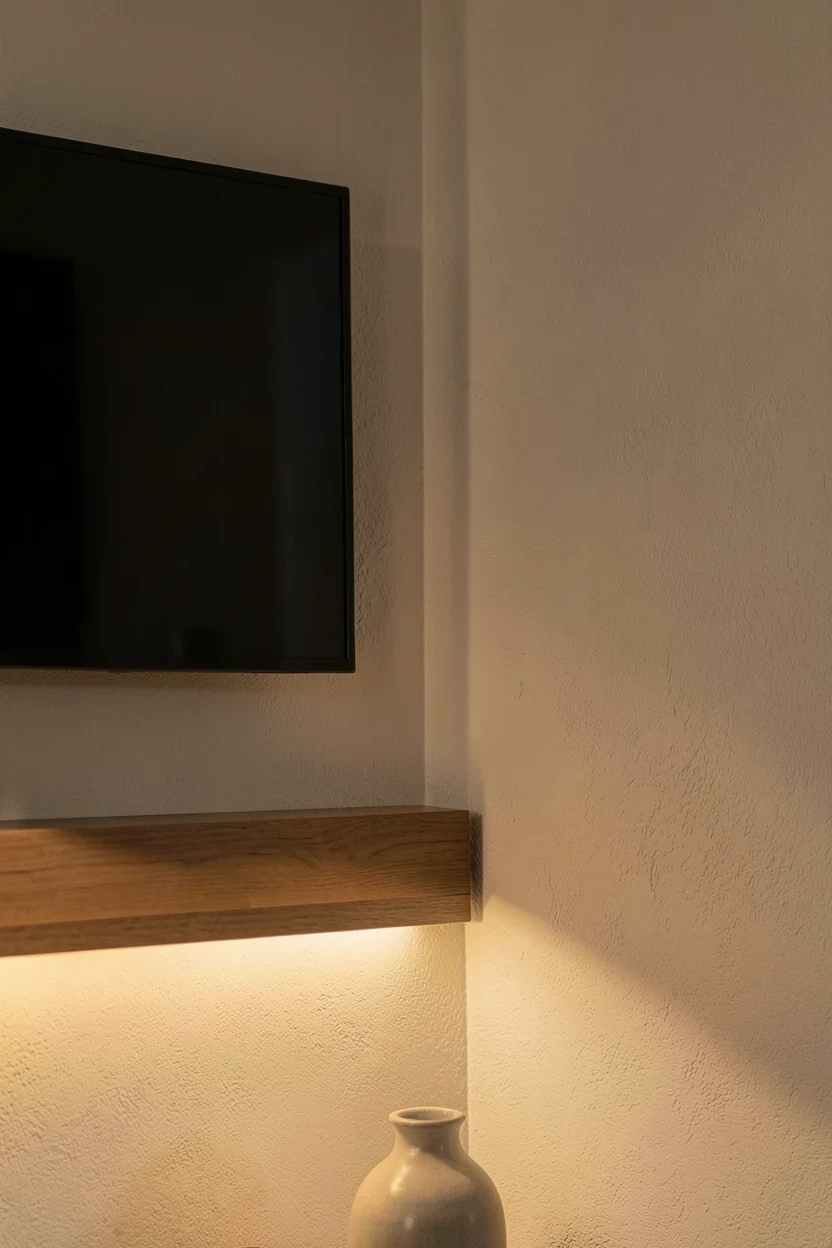
A soft wash of light beneath a shelf can make a dark media wall easier to look at when the rest of the room is dim. Direct the light onto the wall or shelf below and keep the source out of view from the main seats. Test it with the TV turned off first. The black screen makes reflections easy to spot. Then watch a dark scene with the light on to see whether it is distracting. Put the shelf lighting on a separate control so it can stay off during a movie. Start with a subtle warm light and increase it only if you need more visibility.
Choose the Layout Before the Decor
Tape out the TV and shelf edges first, check the view from your usual seats, and decide where cables and everyday items will go. If the wall feels busy on paper, try fewer shelves or keep the storage closed. Once the layout works, add a small group of objects and leave room for the screen.