Start with the places where you actually need to see. That could be the table where you eat, the top step when you leave, or the chair where you read after dinner. Once those spots are covered, one soft accent can bring out the timber or a favorite plant without making the whole garden brighter. These gazebo lighting ideas cover both simple portable setups and permanent fixtures. For an exposed spot, check that the fixture is rated for the weather it will face, including rain that can reach beneath an open-sided roof.
1. Center a Shaded Pendant
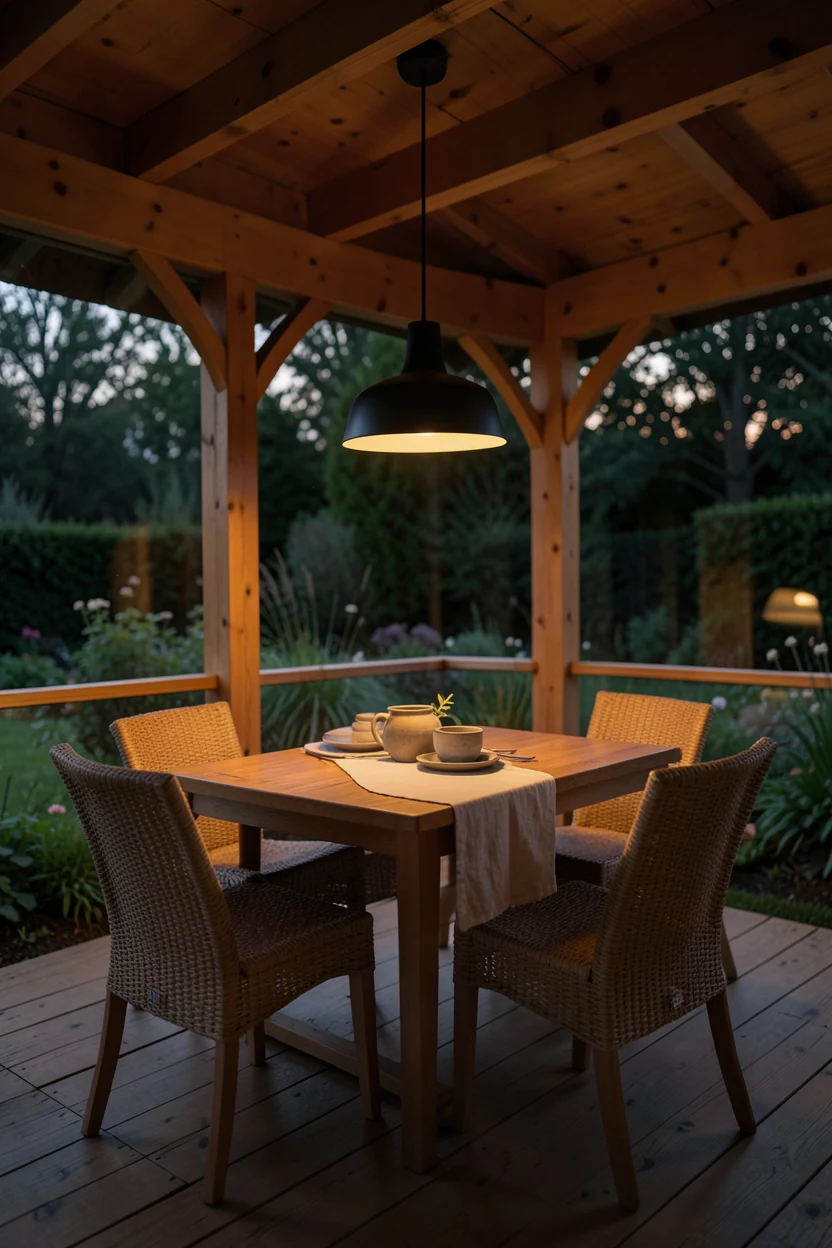
A shaded pendant works best when the gazebo has a clear center of activity, such as a dining table or a conversation area. Center it over the furniture and sit in each chair to check whether you can see the bare bulb. An opaque or frosted shade can soften glare and direct more of the light toward the tabletop. Choose a finish that looks at home with the roof and furniture in daylight too. If the table moves frequently or there is no suitable overhead mounting point, a cordless table lamp may fit the space better. For a permanent fixture, ask an electrician about a suitable outdoor installation.
2. Run String Lights Along the Beams
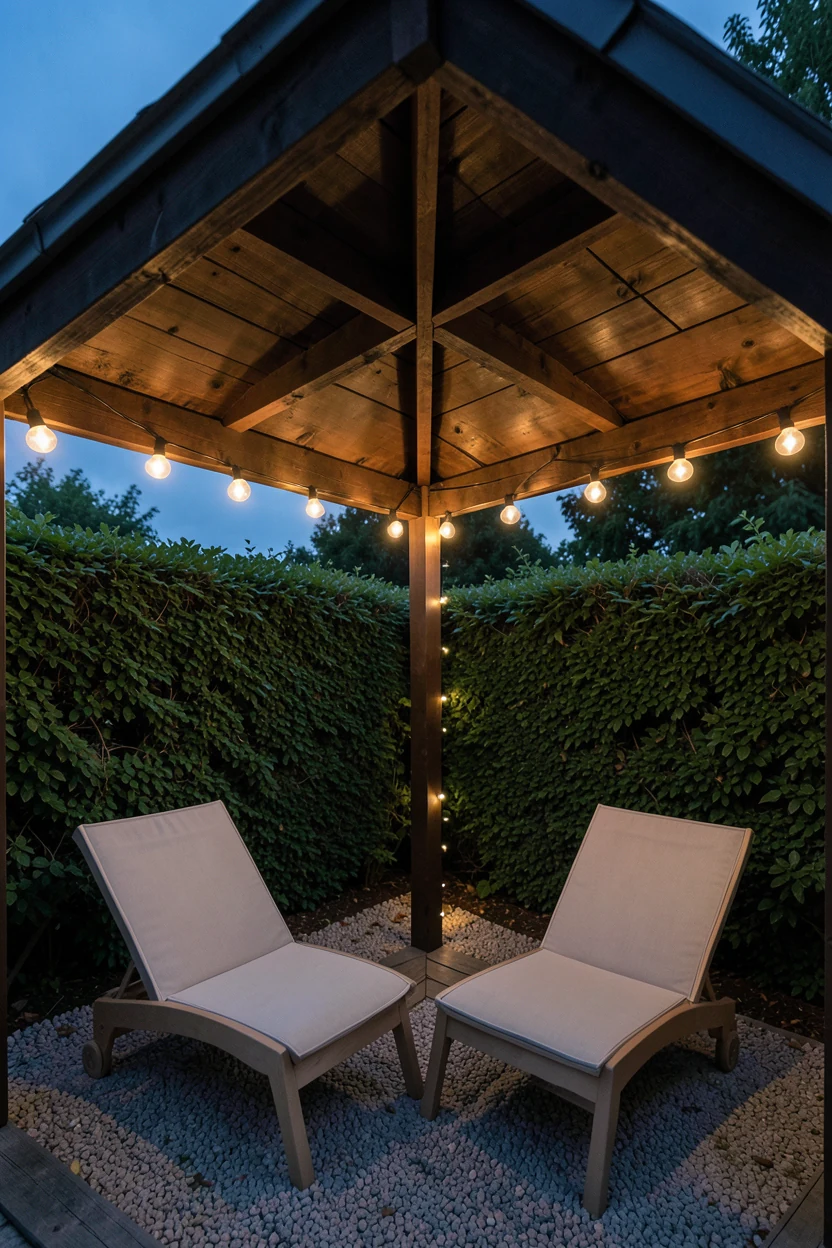
Follow the shape of the gazebo with one run of outdoor string lights tucked near the inside edge of the roof. The repetition makes the frame easy to see from the garden, and it can be enough background light for casual conversation. Keep the center open if you want the roof structure to remain visible or plan to add a pendant later. From the seating area, check that a bulb does not hang directly at eye level. Compare a gentle drape with a closer fit before deciding on the look. Follow the light manufacturer’s mounting instructions and check that the fixtures are rated for the spot where they will hang.
3. Wash the Ceiling With Hidden Light
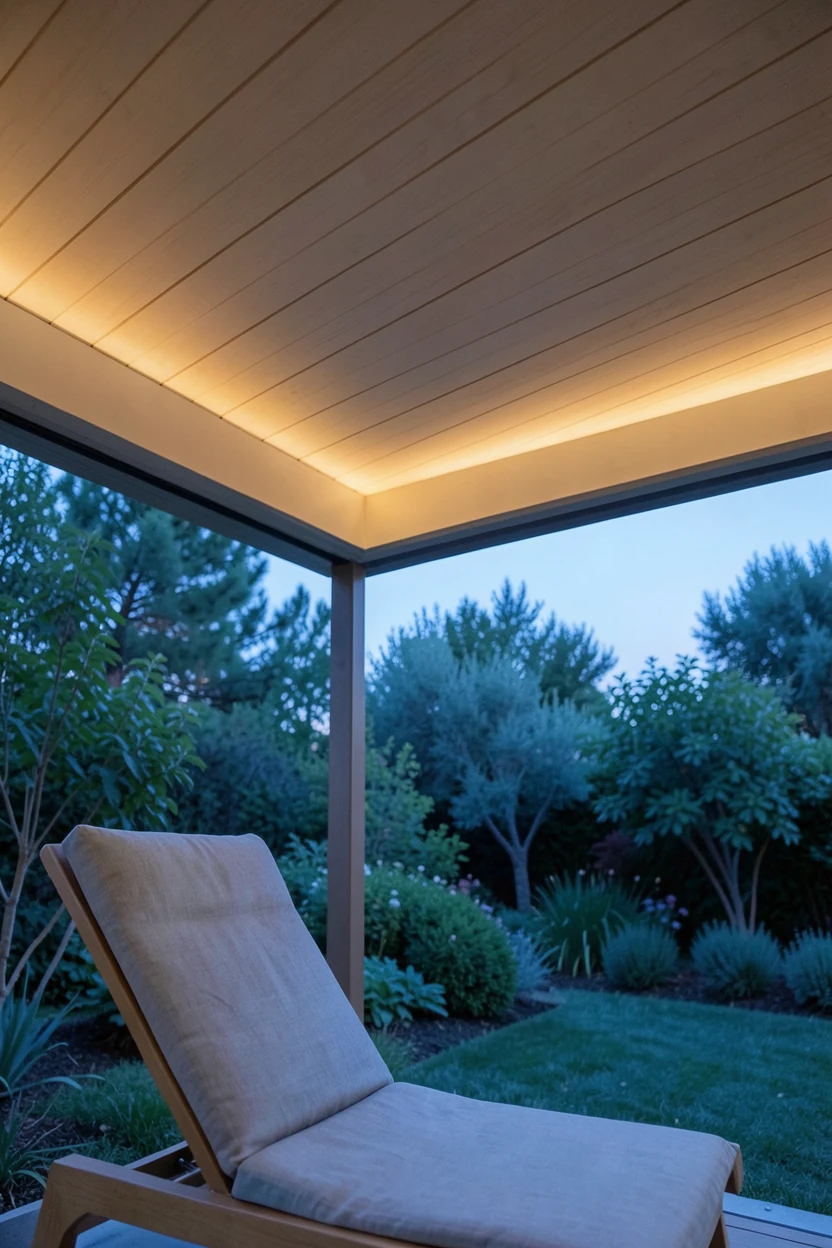
An indirect ceiling wash is worth considering if bare bulbs feel bright from a low chair. Conceal an outdoor rated strip or linear fixture behind a beam so the ceiling catches the light and the source stays out of sight. The pale underside of a roof will make the wash more noticeable than dark stained timber. Try a temporary light against the surface at dusk to see how evenly the color spreads. A diffuser can help avoid visible dots where a small section of the source is exposed. Keep this layer gentle, especially if you want a tabletop lamp or lantern to remain the brightest element.
4. Use Shielded Sconces at the Entrance
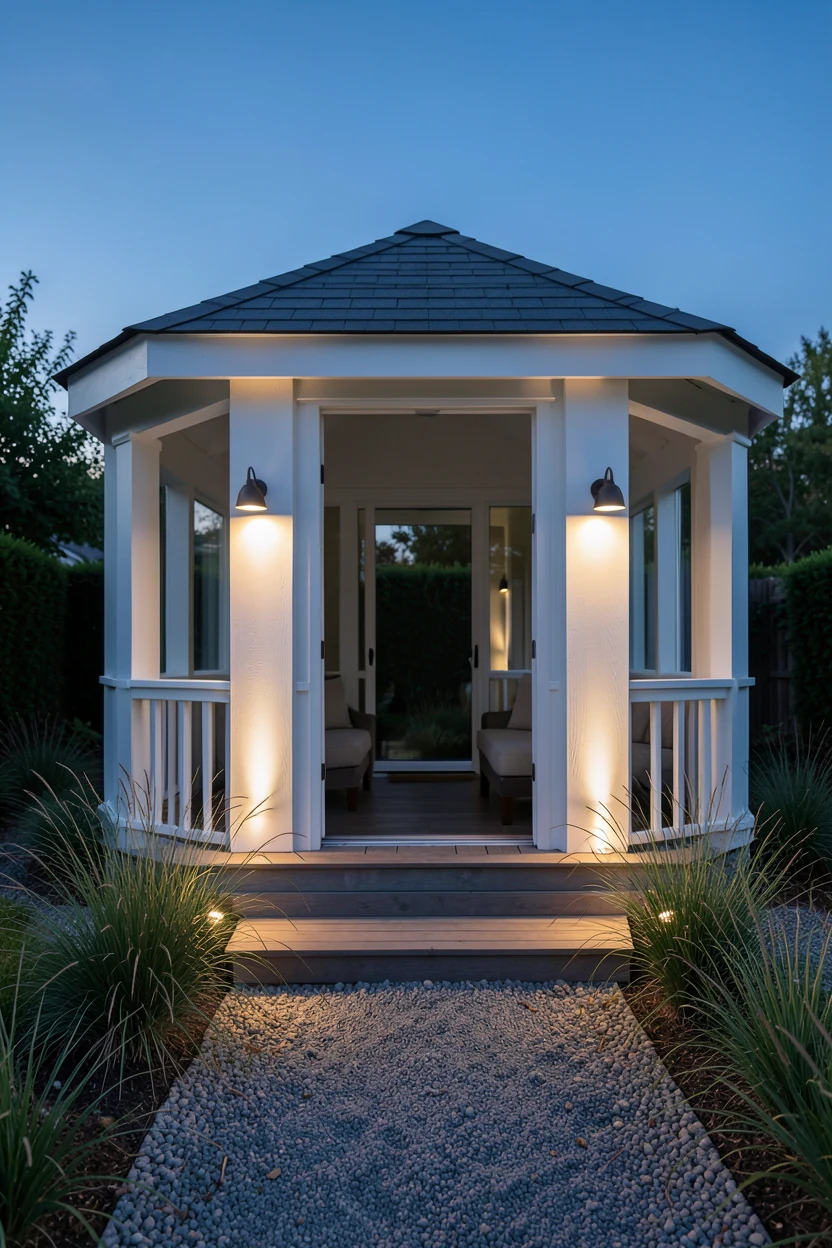
Sconces are useful when the opening is hard to spot from the house or garden path. Place the visual emphasis on the entry posts and choose shades that direct the light downward. Check the approach from several directions at night, especially if the gazebo is visible from a neighbor’s patio or an upstairs window. A pair makes sense for a symmetrical opening, while one fixture can suit a narrow entrance where only one post has a clear mounting spot. Let the sconces define the doorway. If there are steps, give those their own light so a decorative fixture does not have to cover the entire approach.
5. Grazing Light for Timber Posts
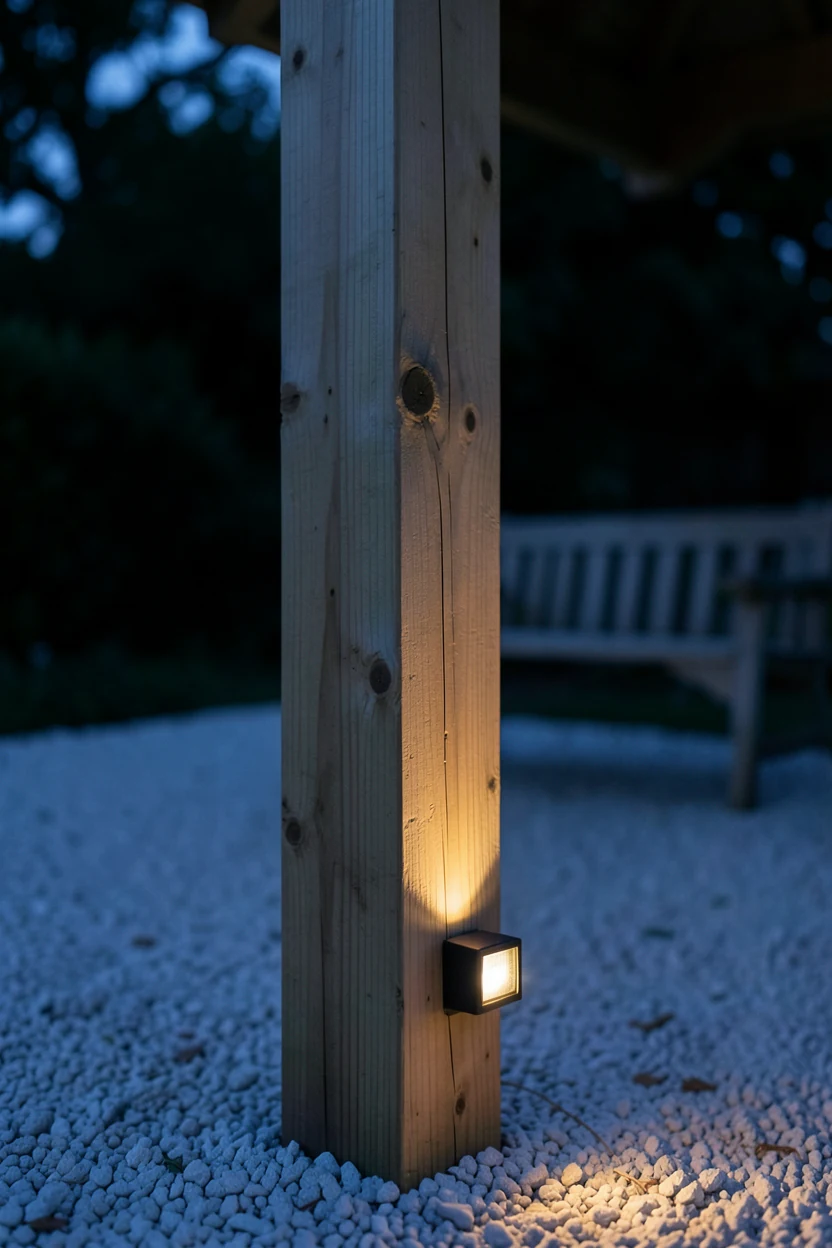
If the timber frame is one of your favorite features, light a post closely enough to reveal its surface. A low shielded fixture aimed along the face creates shadows in the grain and shows the edge of the beam. Start with a single prominent post and judge it from a chair and the path. A broad beam may spill into the roof or the garden, while a tighter one keeps the effect close to the wood. Leave smooth painted posts alone if the effect looks too stark. This layer is decorative, so leave walking surfaces to separate fixtures that make the route easier to see.
6. Light Each Change in Level
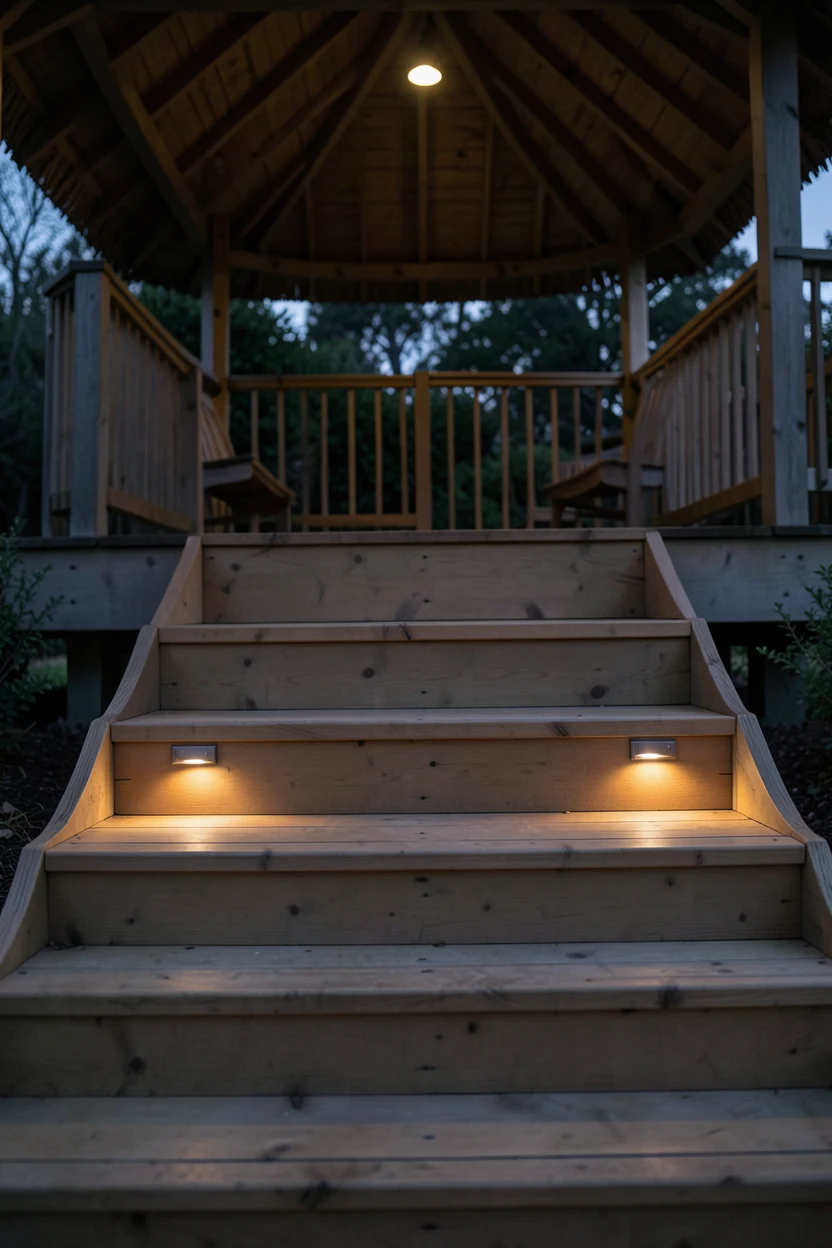
A gazebo can look bright from the garden while its steps remain in shadow. Focus on the point where the path, stair tread and deck meet. A small recessed or shielded fixture can wash light across the tread and show the edge from either direction. Test the view coming down from inside as well as coming up from the path. If the source is visible as a bright dot from one of those positions, choose a design with better shielding. Keep the pattern even across the steps and resist making the entrance brighter than it needs to be. Ask a qualified installer about permanent fixtures in exposed locations.
7. Guide Guests With Path Lights
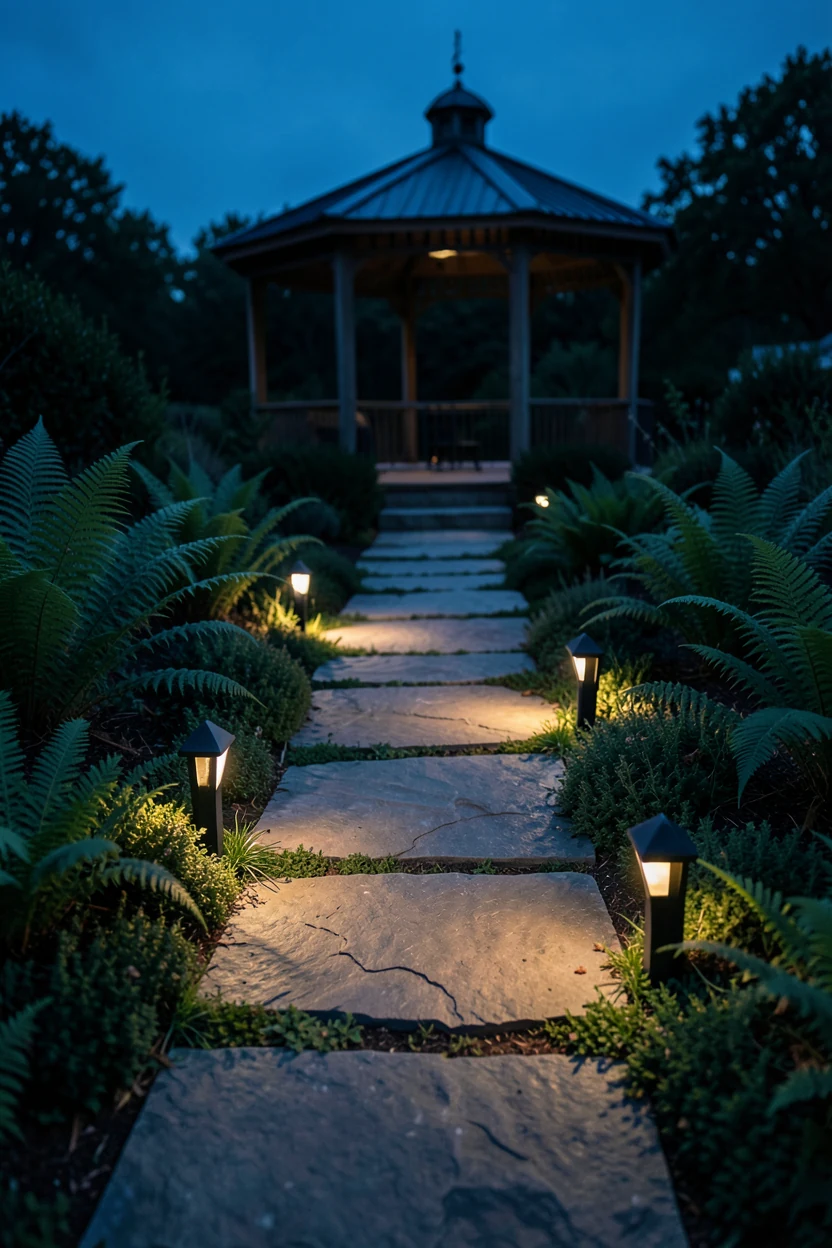
Walk the route from the house after dark before placing any lights. Pay attention to bends, surface changes and places where the path merges with planting. A few low fixtures aimed at the ground can make those points legible. You can stagger the lights along a winding path or place one where a straight route begins and another near its end. View the fixtures from the gazebo too. If they form a row of bright points across the garden, try fewer lights or deeper shades. Keep fixtures and cords clear of the walking surface and place them where you can maintain the plants around them.
8. Use a Cordless Lamp for the Table
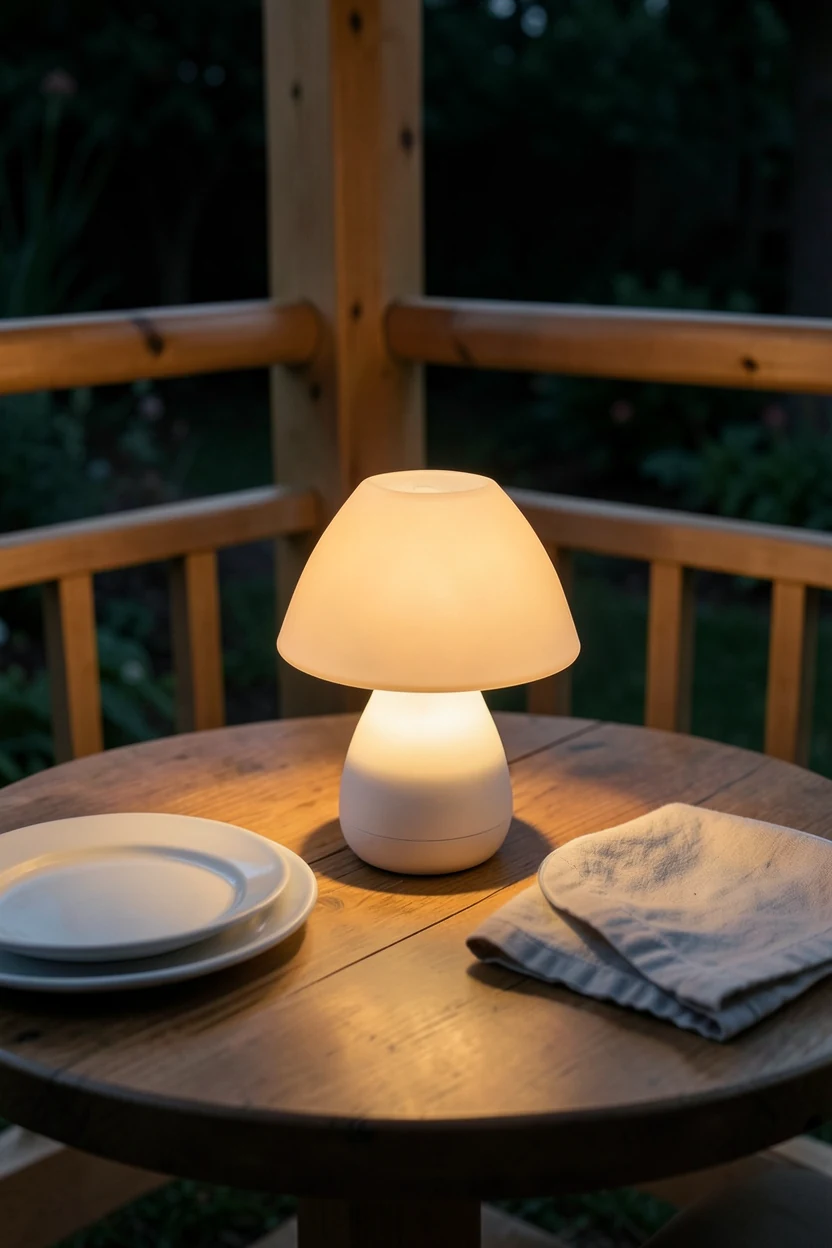
A cordless table lamp is an easy starting point when the gazebo has no convenient power source or the furniture changes position. Pick a stable base and a shade that directs light onto the table. A low lamp can illuminate a plate or a deck of cards while leaving faces visible across the table. Try the lamp on its dimmer setting for conversation and increase it only when you need to read or work. Check the maker’s weather rating and recharge it before guests arrive. If it cannot stay outside in the expected weather, treat it as something you carry out for the evening and bring back afterward.
9. Put Lanterns Beside the Seating
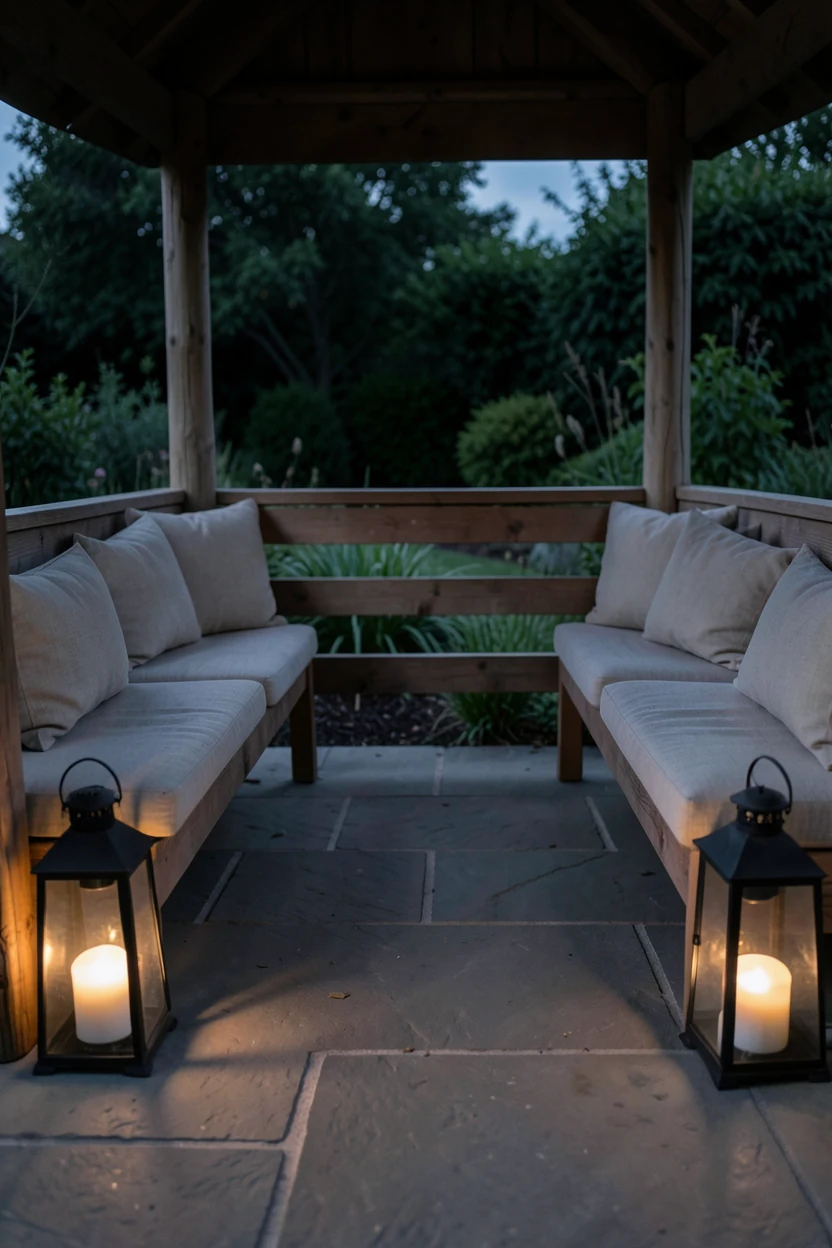
Place a pair of portable lanterns near the seating rather than in the center of the gazebo. Low light at the ends of a bench can give the space depth and make the seat easier to find after dusk. Choose weighted lanterns that are stable when someone brushes past. Keep them beside furniture or tucked into a corner, with the walking route open. Battery powered flameless options give a warm glow around fabric cushions without an open flame. From each seat, check that the light is soft enough to look past when you turn toward someone else. If the sides are exposed to rain, check the lantern’s outdoor rating.
10. Highlight One Plant Beyond the Roof
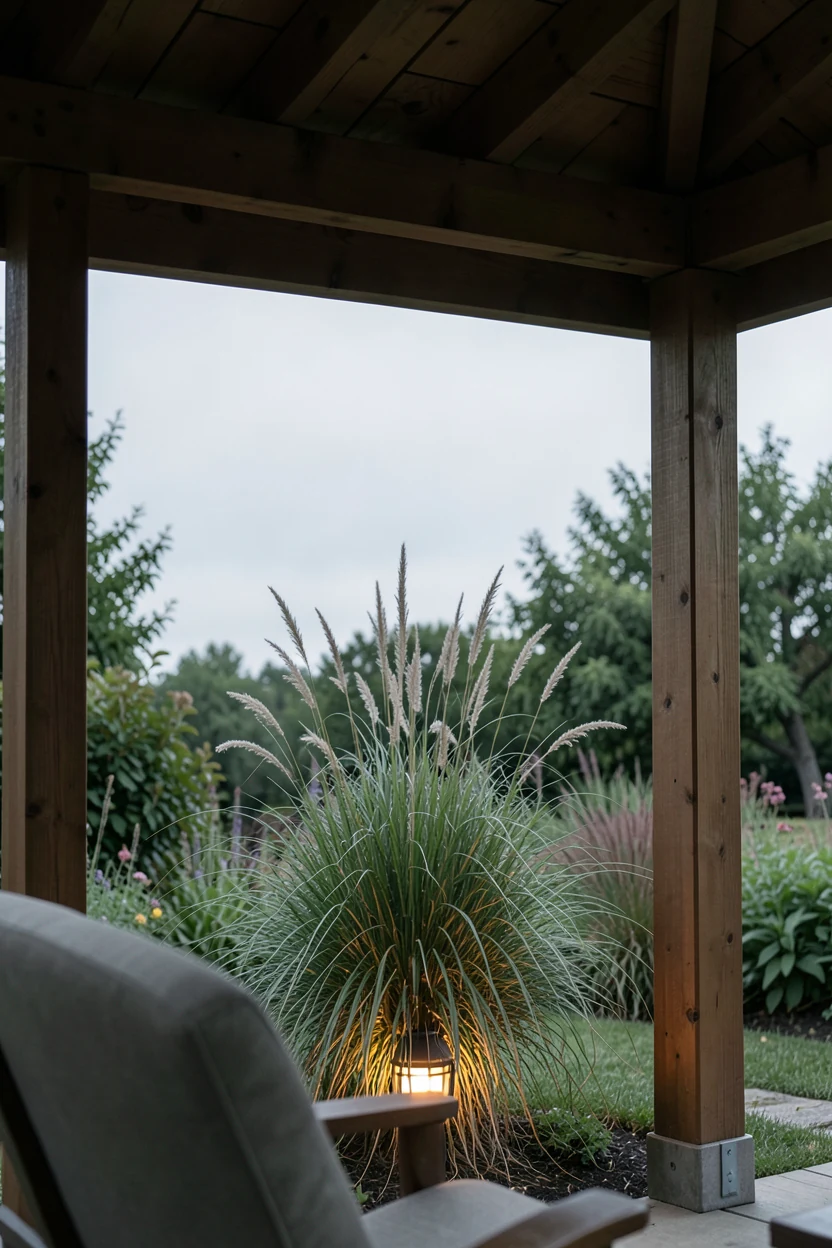
From a favorite chair, pick a single plant you would enjoy seeing after dark. A shrub with an interesting outline or ornamental grass with fine texture usually needs little light to stand out. Aim a small shielded fixture toward the leaves and stop the beam before it extends beyond the planting. Look at it from the path and neighboring seating too. If you can see the bright source, change the angle or hide it behind a low edge. Leave the rest of the bed in shadow so the garden still has depth. This accent can stay off on nights when you only need the table and entrance lights.
11. Place Solar Lights Where They Can Charge
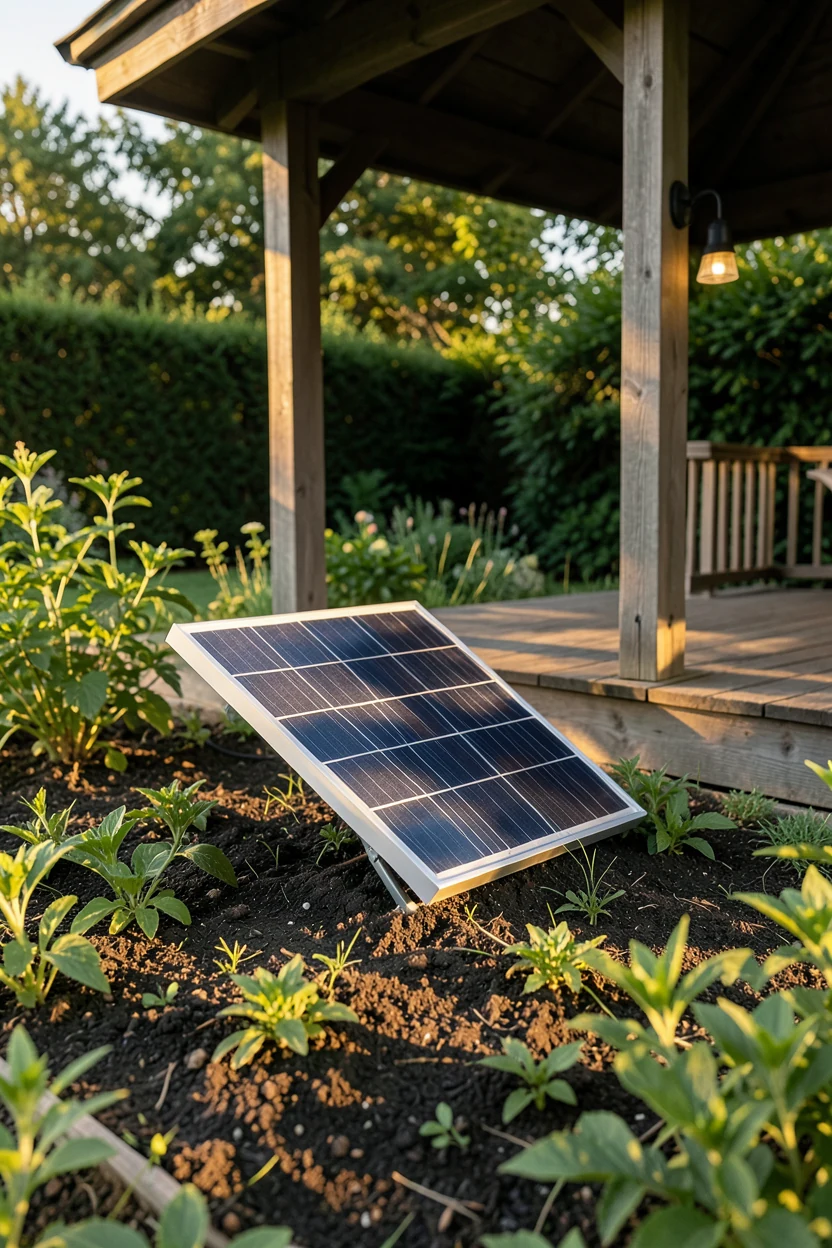
Solar lights suit small accents where getting power to the gazebo would be inconvenient. First look at the space in daylight. The spot that needs light at night may be under the roof or shaded by trees when a panel needs to charge. Choose a unit with a separate panel if you have an open spot nearby and the product is designed for that setup. Keep the panel clear of foliage and follow the maker’s placement instructions. Check how long the light actually lasts on a cloudy day. Where guests rely on a step or entrance light after dark, use a source you can count on when the solar charge runs low.
12. Aim a Reading Light at One Chair
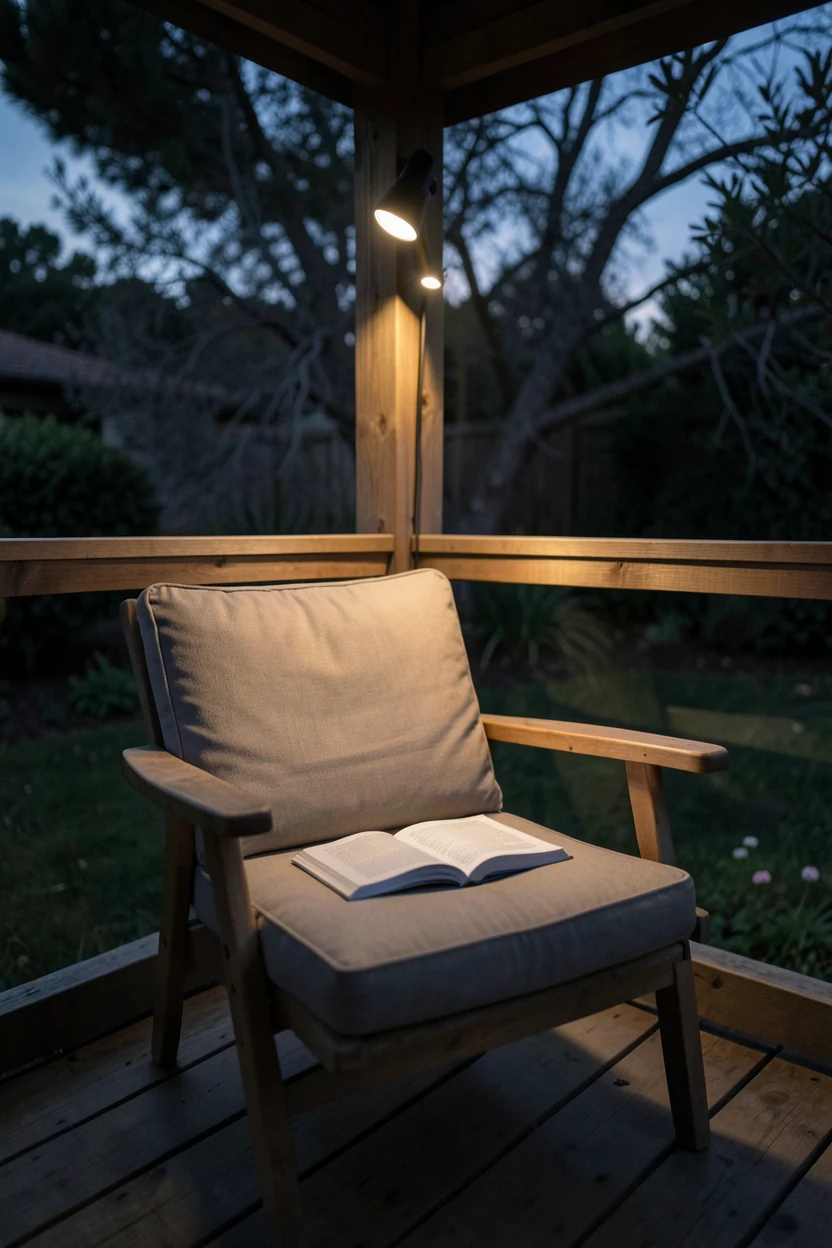
If you use the gazebo to read, think about where the book rests before choosing a light. A small adjustable fixture can send light over your shoulder and onto the page without brightening the whole shelter. Test it in your normal seating position and check whether the shade blocks the direct view of the bulb. A lamp that can be moved is helpful when the chair doubles as seating for guests. Choose an outdoor rated fixture for the location. Keep the beam away from the seat opposite and give the reading light a separate control so you can turn it off when you want softer general light.
13. Put Lighting Layers on Separate Controls
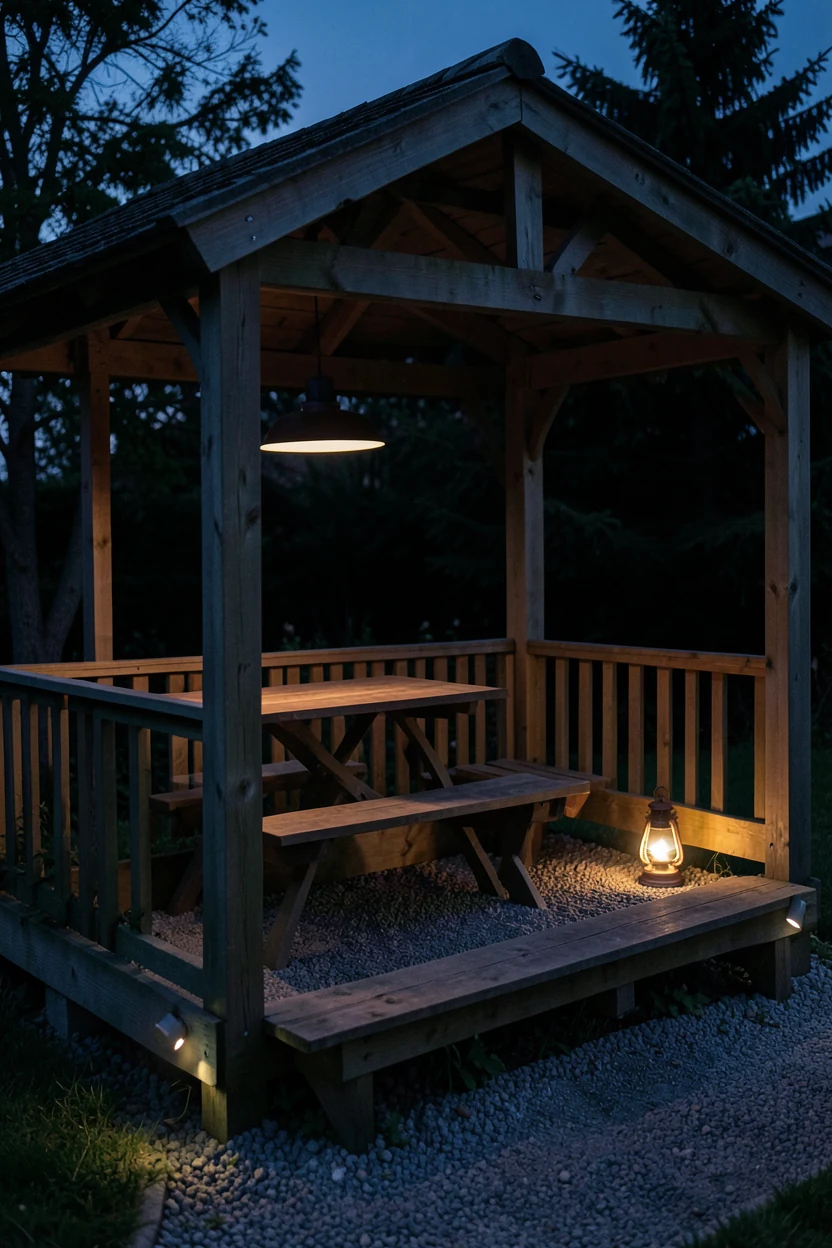
A useful lighting plan lets you turn off what you are finished using. Keep the entrance or steps on one control, the dining light on another, and the decorative lights on a third if the layout allows it. That way you can clear the table, dim the seating area, and still see the route back to the house. Place a control where someone can reach it on the way out. A compatible timer can switch decorative lights off after the evening while a manual control lets you make changes when guests stay longer. For any permanent controls or new wiring, discuss the installation with a qualified electrician.
Build One Layer at a Time
Try the approach and steps first, then add the light that serves your favorite evening activity. A shaded pendant suits a fixed dining table, and a cordless lamp works when you move things around. Sit inside after dark, look back from the path, and adjust anything that shines in your eyes. Add a decorative layer only where it improves the view.